
Sekiro: Shadows Die Twice — A Detailed Beginner's Guide (2026)
Information current as of August 2026.
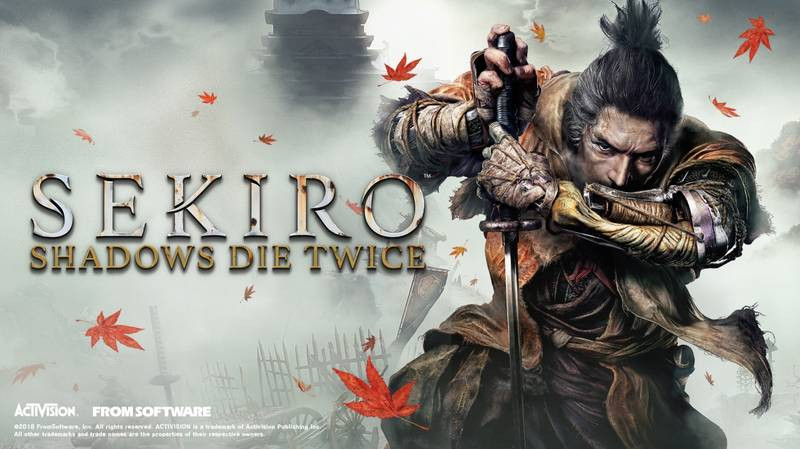
Sekiro: Shadows Die Twice (2019) is a game by FromSoftware about the ninja Wolf in Sengoku-era Japan. This isn’t Dark Souls: there’s no leveling up stats, no gear builds, and no invincibility frames. Instead, it features a stamina system, parrying, and vertical movement using a grappling hook. The game is renowned for its difficulty but follows clear rules. This guide will help beginners get a feel for its rhythm.
The main difference: Stamina instead of health
Both you and your enemies have two bars: health and stamina (posture). Stamina builds up through blocks, parries, and attacks; a full stamina bar breaks the enemy’s defense and leaves them open to a finishing move—an instant kill against a regular enemy or a full phase reduction against a boss. Conclusion: the goal of combat isn’t to deplete health, but to break stamina.
Deflection—the Heart of the Game
- Deflect is a last-second block just before an enemy’s strike. Don’t hold the block—tap rhythmically in time with each strike;
- A perfect Deflect barely depletes your Stamina and deals heavy damage to the enemy’s Stamina;
- A regular held block also works, but it depletes your stamina—use it as a backup while you’re learning the timing;
- The sound indicates the quality: a crisp “clack” and a bright flash mean a perfect deflect;
- Rhythm is more important than speed: enemy attacks come in sets with a fixed rhythm—learn the pattern of the set and block it as if it were a rhythm game.
Dangerous Attacks: Red Icon
Attacks marked with a red symbol cannot be blocked. Three types—three responses:
| Attack type | How to Counter | Move |
|---|---|---|
| Stabbing Thrust | Mikiri Counter | Somersault/step FORWARD toward the enemy—stomp on the blade |
| Horizontal Swing | Jump | Jump, then perform a jumping strike to the head |
| Grab | Step back/to the side | Cannot be parried or jumped over—step out of the line of attack |
Mikiri Counter—top priority in the skill tree. Buy it from the sculptor as soon as possible: it turns enemies’ stabbing attacks into your best tool for punishment.
Death and Resurrection
The game’s subtitle—“Shadows Die Twice”—refers to the resurrection mechanic: when you die, you can rise once at that spot with half your health. This gives you a chance to retreat or finish off your opponent. Side effect—Dragon’s Weakness: Frequent deaths infect NPCs with a disease, blocking their storylines. It can be cured with a “Blood Tear” from the sculptor—don’t hoard tears indefinitely, but don’t panic over the ailment either: it won’t break a critical situation.
Sinobi Prosthesis: Tools
Volka’s mechanical arm carries interchangeable tools—find them in the world and upgrade them at the sculptor’s:
- Shurikens—knock down jumping enemies and dogs, and lure out lone enemies;
- Fire Flask (Fire Breath)—effective against fire-fearing enemies: beasts, Mibu inhabitants;
- Umbrella Shield—provides complete protection against attacks while jumping and status effects; indispensable against “ghostly” enemies;
- Whistle—controls beasts and stuns animal bosses;
- Lightning Rod — a late-game tool against electric attacks.
Tools consume Spirit Emblems—purchase them from the sculptor and vendors on the maps.
Skills and Camouflage
Experience fills the skill gauge; points are spent on techniques in three skill trees (Shinobi, Ashina, Prosthesis). Priority for beginners:
- Mikiri Counter—mandatory;
- Breath of Life (restores resilience after a fatal blow) and resilience/health boosts;
- Leaping Death Blow and prosthetic strikes—as you like;
- Active Techniques: Choose one favorite (for example, “Cutting Wind” or “Night Fog”)—you can’t spam them all at once; only one technique fits in a slot.
Stealth and Lethal Strikes
Sekiro is a game about ninjas: half of the difficult sections can be resolved without a fight. Sneak across rooftops, kill from ambush, and take out enemies one by one. A stealthy critical strike removes an entire phase from humanoid bosses. The yellow “ears” above enemies indicate detection: yellow means they’re on alert; red means combat.
Key Bosses and What They Teach
- Gon’ichiro Ashina—the first real test of Mikiri’s parries and counters;
- Executioner Bulls / Fire Bull—don’t block; run after it and strike it from the side;
- Guardian Monkey—teaches you not to be greedy: 1–2 strikes after a combo;
- The Great Owl Shinobi — a test of vertical movement and Mikiri;
- Isshin Ashina—the final test of everything: parrying, Mikiri, jumping, and patience.
Tips for Beginners
- Don’t hold the block button down—parry each strike with a separate press.
- A full Stamina bar won’t break as long as you’re blocking perfectly: keep blocking even under pressure, and don’t panic.
- A roll (step) is faster and safer than a jump for getting out of the line of attack.
- Farm experience before boss fights—your skill bar retains half its charge upon death.
- Use buffs: Ako for attack, Ungo for defense, before difficult battles.
- The grappling hook isn’t just for movement: use it to catch up to fleeing enemies and land lethal strikes in midair.
- Losing to a boss 10 times is normal in Sekiro. Every attempt teaches you its rhythm.
Conclusion
Sekiro requires you to retrain your reflexes after Dark Souls: no random somersaults “into nowhere,” just the rhythm of parries and aggression. Master blocking and the Mikiri counterattack against Ashina’s ordinary soldiers—and the game will transform from “impossible” into one of the most thrilling combat systems in the genre.